

Louisiana cannot reach its full potential unless every citizen and community is fairly represented in the corridors of power. Unfortunately, the 2026 legislative session will likely be remembered most for attacks on that guiding principle.
Legislators began the three-month lawmaking period by eliminating the office of Clerk of Criminal Court in New Orleans, and ended it by eliminating judgeships in the Crescent City and reducing the number of Black-majority congressional districts in the state from two to one. In a state with a long legacy of structural racism, these laws reduce the power of Black residents to decide who represents their interests.
In between they passed a budget package that spends more money on prisons and jails, but leaves public schools, higher education, child welfare services and other vital services without adequate funding. Legislators erected new barriers and paperwork requirements for Louisianans who rely on the public safety net, yet refused to raise wages for the lowest-paid workers. They approved major new tax breaks and liability protections for aerospace companies, and gave new legal protections to other polluting industries.
While the overall outcome was disappointing, the session was not without some important gains. A bill to require six weeks of paid parental leave for K-12 educators passed overwhelmingly, though lawmakers failed to include money in the budget to fund the program.

Lawmakers also authorized new funding to help companies upgrade the skills of their employees, expanded apprenticeship and work-based learning programs, set aside $50 million in new funding for fortified roofs, and passed a bill requiring that children in public schools are screened for food insecurity.
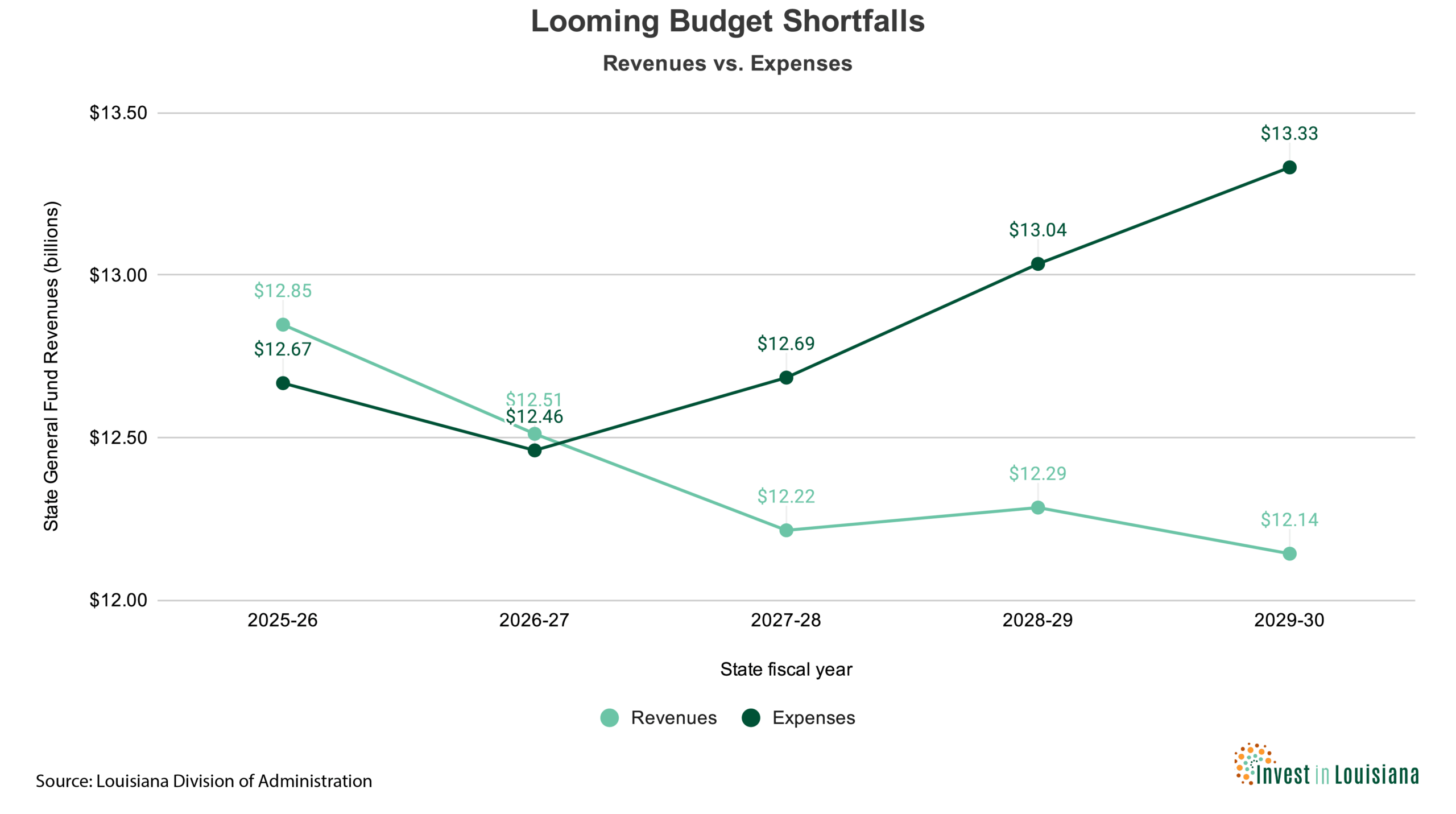
The end of the session comes as Louisiana faces a fiscal reckoning. Tax cuts passed by the Legislature in 2024, tilted heavily to large corporations and the wealthy, have reduced the amount of revenue available to meet the state’s needs. At the same time, the cost of administering public programs such as Medicaid and the Supplemental Nutrition Assistance Program is increasing, due to changes in federal law that push more costs onto the state while reducing the number of people who are eligible for benefits.
As a result of these federal and state policy decisions, Louisiana is expected to face significant budget shortfalls starting next year. This will make it even harder to make needed investments in teacher pay, early childhood education and a stronger safety net.
For far too long, Louisiana’s economy has worked well for those at the very top, while leaving too many people and families behind. Creating a more inclusive economy that works for everyone requires strong, new investments in education, worker training, health care and the safety net. It takes policies that support workers and families, not just owners and shareholders.
New polling shows that Louisianans overwhelmingly support Medicaid and SNAP, and want to see these programs strengthened rather than squandering our scarce resources on more tax cuts. Louisiana must do better, and the next chance to do so will come in the 2027 “fiscal” session. In the meantime, these are some of the key issues that Invest in Louisiana monitored in 2026:
Budget and Taxes
The 2026-27 budget illustrates the tough sacrifices states must make when lawmakers eliminate much-needed revenue sources.
Gov. Jeff Landry proposed a “standstill” budget in February, that sought increased spending for corrections and private-school scholarships. But the state revenue outlook was downgraded in May by $104 million, prompting legislators to nix proposed increases to the state’s public school funding formula and for private school vouchers.
Legislators also found money in the budget to give pay raises to several cabinet officials, but did not come up with money to replace annual $2,000 stipends for public school teachers and $1,000 stipends for school support workers. An executive order by Landry, signed the day after lawmakers adjourned, would carve out money for the stipends from “non-instructional” parts of the education budget.
Lawmakers tapped $850 million from a state savings account to pay for road, bridge and other construction projects, corporate incentive payments, and pet projects in legislators’ districts. It was the third straight year legislators have tapped the savings account, called the Revenue Stabilization Trust Fund, which gets most of its money from corporate income and franchise tax collections. But doing so will be harder in future years, because the 2024 tax cuts mean that less money will be flowing into the fund.
In an effort to attract billionaire-owned space companies to the state, lawmakers also rushed through legislation that would extend generous property tax exemptions to aerospace companies, exempt them from some public records laws and protect them from noise and trespass complaints.
And Senate Bill 379 gives new power to the State Mineral and Energy Board to reduce royalties on oil and gas extraction from public lands when commodity prices fall or “other economic factors” warrant.
House Bill 381 would have disqualified companies from the lucrative High Impact Jobs payroll-subsidy program if 20% or more of their employees qualified for SNAP benefits. It died without a committee vote, replaced by a non-binding resolution that urges the state’s economic development agency to consider the idea.
On the bright side, the House Ways and Means committee mothballed proposals to further reduce, phase out or outright eliminate the state’s personal income tax, and the House voted down a proposed constitutional amendment that would have imposed a dangerous government growth limit.
Safety net
More than 200,000 people have dropped off Louisiana’s Medicaid rolls over the past year, and 168,000 fewer Louisianans are receiving SNAP benefits since the harmful federal megabill (H.R.1) was signed into law last July. These changes are mostly due to changes in federal law that restrict eligibility and put new barriers in front of people with low incomes who need help paying for food and health care.
The 2026 session was a step backward for people who rely on safety net programs, especially immigrants and children. It shows the state is far more invested in policing, verifying, and privatizing the safety net than in expanding it. The bills that passed tightened immigrant families’ access, automated benefit cuts around child custody, and stood up a donor-funded parallel food system.
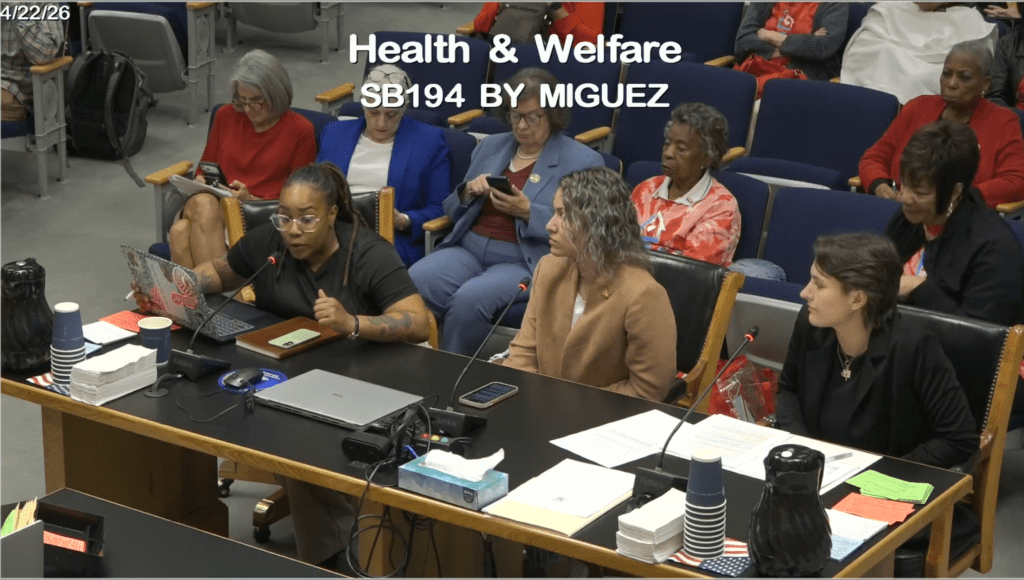
Senate Bill 194 creates new, burdensome barriers for eligible citizens and lawfully present immigrants seeking health care coverage and food assistance. It builds on a pattern of state and federal policies that create a “chilling effect” on citizens and immigrants who are eligible for public benefits – making them less likely to get these benefits due to fear and uncertainty. Most damaging for food access: SNAP applications must now count the income of all household members, a change unlocked by the federal One Big Beautiful Bill Act. This falls hardest on “mixed-status” households, including the U.S.-citizen children in them, who may see benefits shrink or vanish, and immigrant families who will simply stop applying rather than risk their information being routed to federal immigration authorities.
One good thing: An amendment adopted by a House committee protects Medicaid and CHIP coverage for certain lawfully residing immigrant children.
Senate Bill 52 requires the Department of Children and Family Services (DCFS) to notify the Louisiana Department of Health (LDH) whenever a child is removed from or returned to a parent’s custody, so that SNAP, Medicaid, WIC and cash-assistance benefits can be adjusted. The bill creates new reporting, data-sharing and verification requirements for DCFS and LDH and increases the likelihood that benefits could be reduced or interrupted based on incomplete or outdated information. Families involved in the child welfare system often experience frequent changes in living arrangements, and mistakes or delays in updating records could lead to eligible families losing benefits or facing fraud investigations even when there was no intentional wrongdoing.
House Bill 181 gives the Legislative Auditor access to individual-level state income tax returns to “determine whether Medicaid and SNAP eligibility determinations were made accurately and to detect and prevent fraud in the Medicaid program.” However, state income tax data is not a good source for evaluating Medicaid and SNAP eligibility performance because eligibility decisions are based on current monthly income, but state tax data provides a year-level review.
House Bill 335 requires some private and non-profit organizations that administer public benefits to verify people’s citizenship, and provide information to Immigration and Customs Enforcement (ICE) about anyone whose citizenship can’t be verified. The bill was amended to exempt food distribution, disaster response, Medicaid providers, or entities providing services for domestic abuse, sexual assault, sexual harassment, human trafficking, homelessness, disaster response, or pregnancy assistance.
On the bright side, House Bill 218 requires public schools to ask about food insecurity in the questionnaires that are given to families. But legislators never gave a hearing to House Bill 269, which would have required public schools to provide a free breakfast each day to every student.
Economic Security
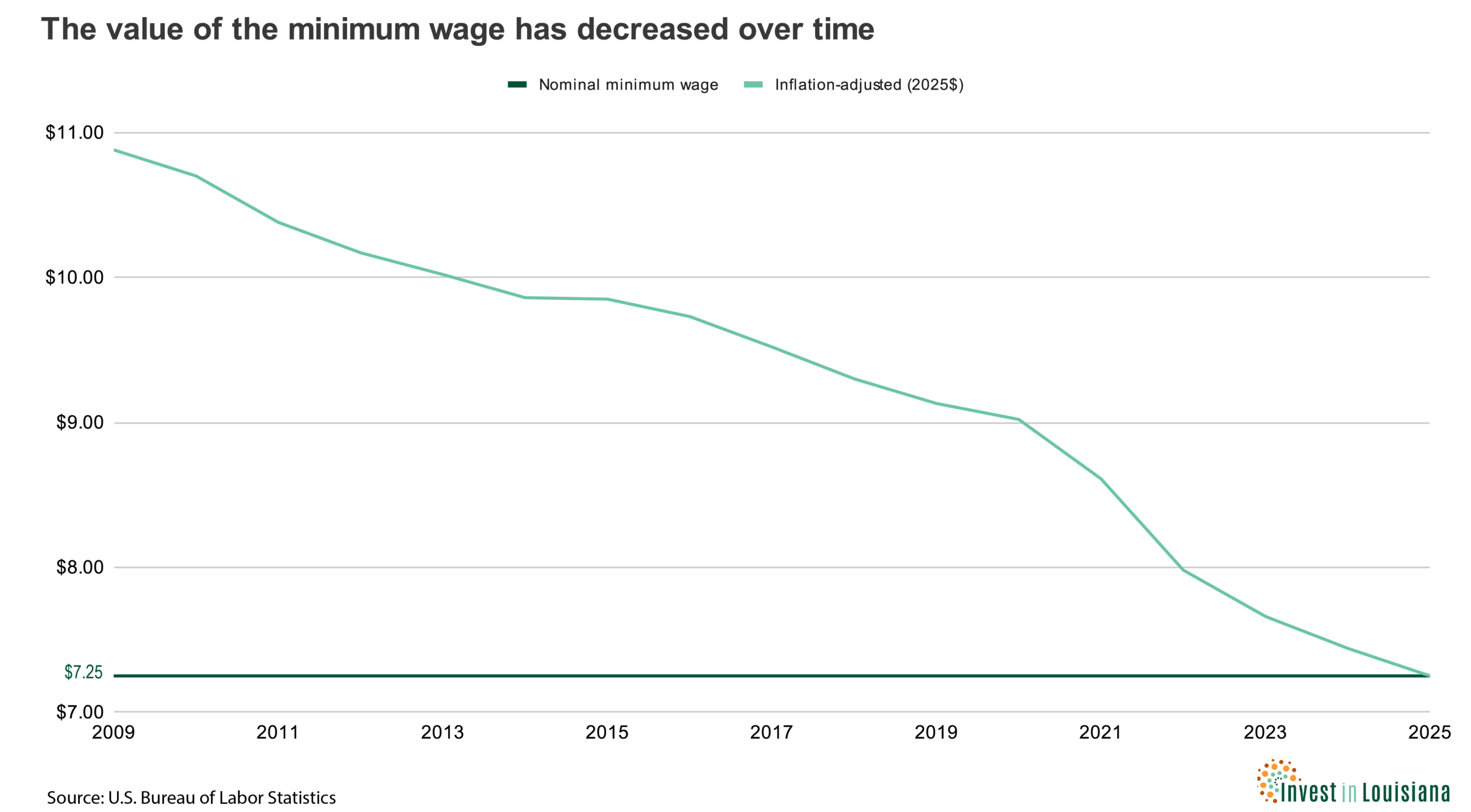
Far too many Louisianans work hard at their jobs, but still don’t earn enough money to make ends meet. One reason for this is that Louisiana remains one of five states without a minimum wage law, which means the state still defaults to the $7.25 federal minimum that has not changed in nearly 17 years.
Three bills were introduced this session (House Bill 353, House Bill 209 and Senate Bill 230) to establish a state minimum wage in Louisiana. All three failed to make it out of a legislative committee. Lawmakers also turned away a bill that would have required small-box retail stores, such as dollar stores, to take steps to safeguard their workers.
Legislators passed a package of bills that are aimed at easing financial hardship for people whose driver’s license has been revoked or suspended. House Bill 722 provides automatic reinstatement of a license once all fines and fees have been paid; House Bill 1173 reduces late fees for people who owe money as part of a license suspension or revocation; and House Bill 762 prevents the state Office of Motor Vehicles from referring debts arising from unpaid reinstatement fees to the Office of Debt Recovery.
State lawmakers prioritized polluters over people during the session. House Bill 804 creates the Louisiana Energy Protection Act, which protects oil and gas companies from liability regarding greenhouse gas emissions and climate change. Senate Bill 356, which failed to make it out of a legislative committee, would have required the 117 industrial plants that emit the most toxic air pollutants to establish fenceline monitors that provide hourly updates on emission releases published on a public website. The legislation also aimed to provide automatic alerts to first responders and neighbors when emissions cross certain thresholds.
Workforce and Higher Education
One area of broad bipartisan cooperation at the Legislature is workforce development. The Legislature took several positive steps this session to ensure that people can get the education and training they need to qualify for available jobs.
Senate Bill 383 expands the Incumbent Worker Training Program, which provides customized training for companies to help them upgrade the skills of their existing workers. It broadens eligibility for the program, creates more training types, and increases funding for the program starting in 2027.
House Bill 807 expands instructor capacity at community and technical colleges, a chronic bottleneck that doesn’t get enough attention.
Senate Bill 322 (LA Youth Apprentice) and Senate Bill 376 (Learn to Earn Act) expand work-based learning pathways for younger workers.
House Bill 325 broadens TOPS Tech eligibility to include part-time students — an equity-positive expansion that better reflects how community college students actually enroll.
House Resolution 17 and House Resolution 171 will produce long-overdue studies on Louisiana’s return-on-investment from TOPS, TOPS Tech, and the M.J. Foster Promise Program.
The most consequential and complicated workforce bill was House Bill 680, which consolidated 15 local workforce boards under the state’s labor department, Louisiana Works. Supporters say it will reduce bureaucracy and direct more money to job training, but it also could take decision-making away from local communities and make workforce programs less responsive to local needs.
House Bill 407 raised the minimum eligibility age for the M.J. Foster Promise Program from 19 to 21. The program provides grants for non-traditional students to train for careers in high-demand fields. Eligibility for the program was on track to drop to 17, but instead it is moving in the wrong direction for a population already facing disproportionate barriers to postsecondary completion. Invest Louisiana opposed.