
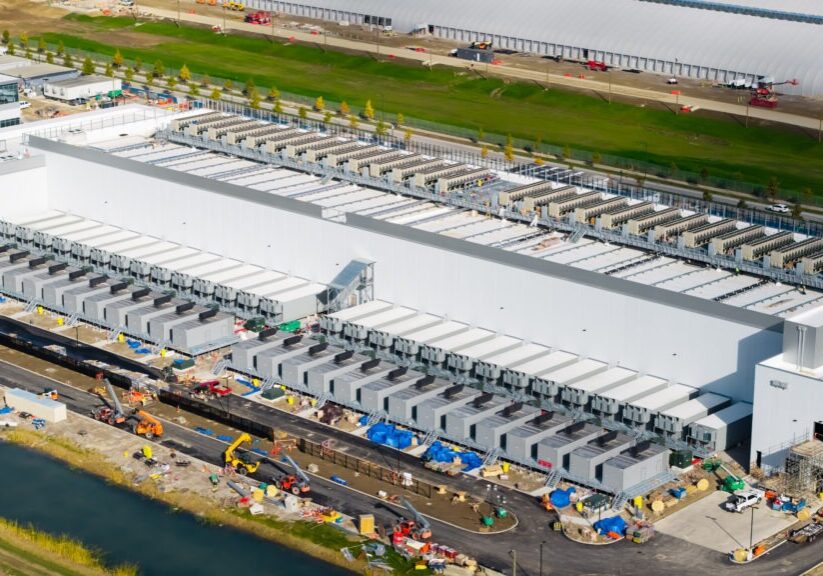
It’s no wonder why politicians and tech executives are rushing to rebrand their data centers (“compute campuses,” according to the techies; “digital factories” according to Gov. Jeff Landry): They had a rough election night. Axios reports that voters in 10 states had a chance to weigh in on ballot measures to put some brakes on the $10 trillion AI buildout. Forty three of them passed, and just one lost. The lesson:
It’s not just changing the name of data centers to “compute campuses,” but offering communities real money, including dividends and benefits for schools or cities, plus environmental concessions and labor protections.
The backlash hasn’t quite reached Louisiana, where massive projects are underway in Richland Parish, Shreveport-Bossier and West Feliciana Parish, and Landry recently announced a plan to have data centers provide more community benefits. Even tech evangelists at The Washington Post – owned by AI mogul Jeff Bezos – acknowledge that communities deserve more input and public benefits from these investments.
Texas offers a glimpse of what might come next. Even before losing reelection, Republican Gov. Greg Abbott temporarily halted data center approvals, demanded that developers cover their own electricity infrastructure costs and proposed ending their tax breaks. His Democratic successor, Gov.-elect Gina Hinojosa, wants to go further, freezing approvals until lawmakers establish protections for county governments, water supplies and electricity customers. In other words, the moratorium is going to be used as leverage.
NC ballot measures are likely to backfire
While a blue tsunami crashed ashore in North Carolina on Tuesday, voters in the Tarheel State also approved ballot measures to cap the state’s personal income tax at 3.5% and make it harder for local governments to raise property taxes to fund local priorities such as schools and public safety. Clayton Henkel of NC Newsline reports that the constitutional amendments come after lawmakers already agreed to cut the state income tax to 3.24% by 2030, and that budget shortfalls are on the horizon:
“We know that people were voting out of concern for rising costs, and we know that one of the best ways for our state leaders to address those rising costs is to fund programs and services that make life more affordable,” said (Alexandra) Sirota (of the North Carolina Budget & Tax Center). “Unfortunately, the tax amendments that passed put in place real limits on future policymakers’ ability to adjust their revenue to the needs of the moment.”
The Center on Budget and Policy Priorities, meanwhile, celebrated voters in Colorado, Washington and California for raising and protecting taxes on the wealthy that help fund public schools, health care and other priorities. But it warned of trouble in states that voted to cut revenue or put new restrictions on their governments’ ability to raise needed revenue.
These cuts and restrictions could become especially consequential in the year ahead. States are required to balance their budgets. As the cost of delivering public services continues to rise and the impact of federal cuts hits budgets, they will be left with fewer funding options. That could lead to increasing reliance on revenue sources like sales taxes and fines and fees, which ask more of people earning the least.
Home prices are still growing
Housing prices in the Baton Rouge region are up 31% since the pandemic – less than the 55% national increase but still enough to make a home less affordable than ever for people with low and moderate incomes. An economist with the National Association of Home Builders told a local audience this week that inflation, interest rates and labor shortages caused by the data center buildout and the Trump administration’s immigration policies have all contributed, along with higher regulatory compliance costs. The Times-Picayune | Baton Rouge Advocate’s Ianne Salvosa:
Broader economic conditions in the United States have been uncertain: The war in Iran has increased costs for essential commodities like gasoline and fertilizer, economic growth is largely concentrated in data centers and artificial intelligence, and the bulk of consumer spending is from the top 20% of earners. Cost of living has outstripped take-home pay for many Americans, creating a tough environment for home building and buying, (Danushka) Nanayakkara-Skillington said. Regulatory costs, which include charges for conducting studies and changes to building codes, total an average $132,000 per new home construction, according to NAHB data, making up about a quarter of a new home cost. That is 40% higher than average regulatory costs five years ago.
A strong jobs report, but for how long?
American employers added 165,000 jobs in October, higher than analysts were expecting and a sign that the AI buildout still hasn’t sapped white-collar jobs as many are expecting. But average hourly earnings were only up 3.1%, marking the seventh straight month where earnings fell below inflation. The Wall Street Journal offers some perspective:
Economists and policymakers have in recent years put more focus on the unemployment rate than the monthly tally of how many jobs were created. One reason is that the monthly jobs figures can be volatile. It is a tendency that may have been exacerbated by a methodological change the Labor Department made earlier this year in how it counts businesses. The shift, while aimed at damping big annual revisions, might have intensified month-to-month swings.
Number of the Day
165,000 – Number of jobs added by U.S. employers in October, more than double the 59,000 that economists were expecting. (Source: U.S Labor Department via Wall Street Journal)