
Insights
- Data Centers and liquified natural gas (LNG) exports are driving up demand for natural gas.
- Louisiana utility regulators should push for more grid regional interconnection and clean energy to lower dependence on natural gas for electrical generation and stabilize prices.
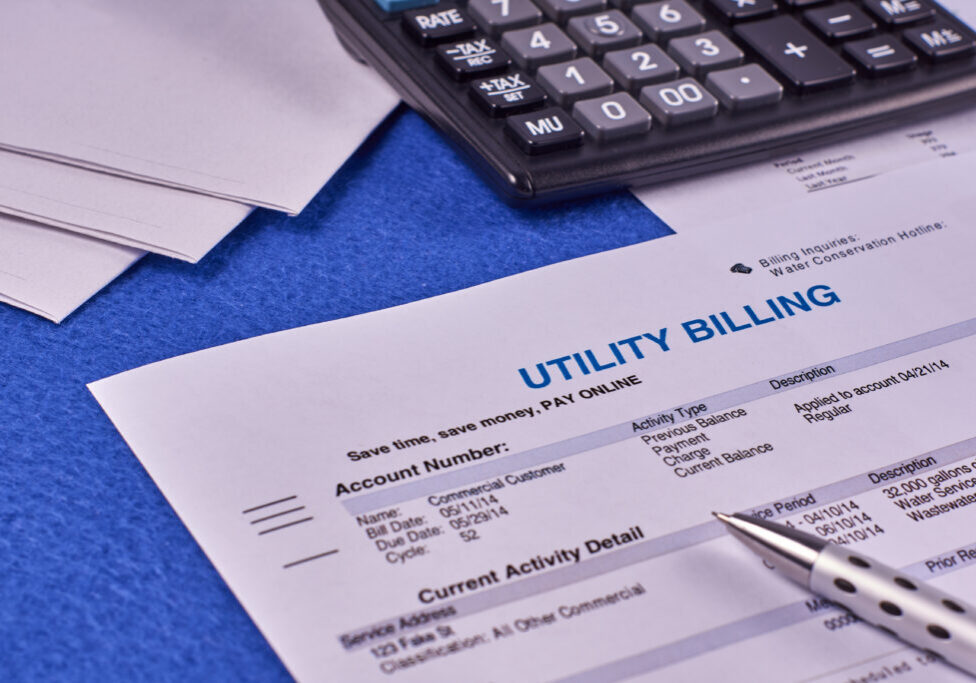
- Customers foot the bill of higher fuel costs through “fuel adjustment” charges.
Louisiana’s utility regulator is fast-tracking a $21 billion gas-powered gambit that will further the state’s dependence on natural gas and likely increase monthly bills for all ratepayers.
Instead of expanding Louisiana’s grid through interconnections to take advantage of cheaper energy sources from around the country – or encouraging more local renewable energy projects to lower costs – regulators are allowing investor-owned utilities to protect their own turf and profit margins at the expense of customers and the environment.
The latest example of this is Entergy Corp’s request to build seven gas-fired generators, in addition to the three natural gas plants approved by the Louisiana Public Service Commission (LPSC) in August 2025, all to power Meta’s massive Hyperion data center in Richland Parish.
The project is being fast tracked under the LPSC’s directive to implement Gov. Jeff Landry’s Lightning Speed Initiative. This policy lets utilities bypass rules that require them to consider the cheapest source of power available for large load customers.
Sacrificing efficiency for speed to market is happening as electricity and natural gas prices are rising around the country.
Wholesale electricity prices are predicted to rise as much as 50% by 2028, according to the Dallas Federal Reserve. Two major drivers behind the cost increase are data centers and natural gas exports.
There are several problems with overreliance on natural gas for electrical generation. The most immediate is growing competition for fuel among utilities racing to meet the insatiable demand of data centers. Some data centers are building their own gas plants, accounting for one-third of natural gas plant development in 2025.
At the same time, more domestic natural gas supplies are going overseas as LNG, particularly from the Southeast region, which reduces supply for U.S. customers.
Customer bills spike when natural gas demand increases, both during winter heating season and during geopolitical conflicts like the current war with Iran that disrupt global markets. When more buyers compete for natural gas, prices rise and are passed onto consumers as “fuel adjustment” charges.
The effects are already being seen. In 2025, electricity bills rose faster than inflation for the first time in 15 years. The North American Electric Reliability Corp. (NERC), a utility watchdog, predicts that summer demand will grow by 24% over the next decade.
The Mid-Continental System Operator (MISO), which oversees 15 states, including Louisiana, expects load growth of 35%, mainly from data centers. And the Union of Concerned Scientists projects that Louisiana data centers could account for up to 87% of the state’s electricity demand growth by 2030.
Demand shocks are crimping the supply chain for new combined-cycle gas plants, whose costs have tripled since the early 2020s. Labor costs are rising, and orders placed today might not be fulfilled until 2030, according to the Institute of Energy Economics and Financial Analysis. Plants entering service in 2030 or later are reporting costs of $2,000 per kilowatt hour, which may soon rise to $3,000 per kilowatt hour. Consumers will be asked to absorb these costs.
Our Patchwork Grid
Think of the national grid as a patchwork of about a dozen regions with limited connectivity between them. Some areas need more power than they can produce, while others have more electricity than they need, including wind and solar. When that happens, electricity production is cut through “curtailment” by grid operators.
More interconnection would allow states like Louisiana to access excess wind and solar power from other regions, reducing the need for so many new plants. It also would help dispel the myth that “intermittent” power like solar and wind don’t work because the sun is not always shining and the wind is not always blowing.
In 2023, the U.S. Department of Energy warned that interregional transmission in the United States must expand as much as five-fold to maintain reliability and improve resilience to extreme weather and provide access to low-cost clean energy.
Louisiana straddles two regional grids, MISO and Southwestern Power Pool (SPP). By building more connections to these larger systems, Louisiana could benefit from economies of scale, more diverse energy resources, lower costs and improved reliability.
Louisiana’s five elected public service commissioners should press utilities to add more interregional transmission.
As regulated monopolies, investor-owned utilities do not profit from selling energy. Instead, they profit when regulators approve new plants, whose costs (and profit) are recovered from customers.
Entergy, which is a Fortune 500 company, also has filed applications with the LPSC to spend $6 billion building three new gas plants and transmission loops to address demand pockets in southwest and southeast Louisiana.
Rather than pursuing a diversified energy strategy and grid interconnection, the company is building for peak energy demand on its own.
MISO is preparing a long range transmission planning (LRTP) assessment for our region that will recommend changes in generation and transmission through a combination of resource mixes and demand changes. But Entergy is rushing to build Meta’s natural gas generators before that assessment is complete.
The utility recently received an F rating from the Institute for Energy Economics and Financial Analysis for its overreliance on natural gas, which accounts for 85% of its fuel mix. The new buildout for Meta will increase that share to 90%.
Southwestern Electric Power Company (SWEPCO), could soon be making a similar request to build natural gas power plants for the $12 billion Amazon data center campus slated for the Shreveport area.
Unlike traditional sources of demand growth, data centers represent large, singular electricity loads that can significantly increase costs and emissions when supply is tight.
Data centers also cause large swings in power demand as computer servers transition between “idle and peak utilization levels,” causing gas turbines to start and stop suddenly, which wears them out quicker. NERC has issued multiple alerts, including a rare May 2 “Level 3 essential actions alert” following massive outages attributed to data centers.
This is a problem, because as industries decarbonize and more sectors of the economy electrify, the nation’s power grids are under increasing pressure to meet exponential demand in innovative ways.
Clean Energy is the Key
Unlike fossil fuels, clean energy sources like wind, solar, and batteries, have no fuel costs and far less price volatility. They are less expensive to build and faster to deploy. As they scale, they help stabilize energy prices, which protects households from sudden spikes.
Renewable costs have also fallen dramatically in recent years. Between 2010-2024, the unsubsidized cost of utility-scale solar in the United States fell by 76%, and costs of wind declined by 51% due to improvements in technology, manufacturing, and project deployment.
Together, solar and wind accounted for a record 19% of total U.S. electricity generation in 2025, more than triple their share a decade ago. Worldwide, renewables accounted for 38% of electricity generation in February 2026, according to the International Energy Agency.
Battery storage is growing even more rapidly, surging 10-fold in 2025 from four years earlier. This makes renewable energy more reliable, storing electricity for when it’s needed.
But Louisiana remains heavily dependent on natural gas, and needs to start planning for a healthier future.
According to the U.S. Energy Information Administration, less than 4% of our electrical generation comes from renewable sources, mostly from wood pulp, while natural gas accounts for 76% of our grid. This is not a diversified portfolio.
Think of a healthy 401k. No financial advisor would suggest pouring 75% of a client’s savings into a single asset type.
At least 31 states and the District of Columbia have adopted binding clean energy standards that require a certain percentage of their electricity production come from clean and renewable energy. Louisiana, which ranks 48th in renewable electrical power, is not among them.
Having a more balanced portfolio with access to wind, solar and batteries can ease the acute demand on natural gas, improve reliability and lower costs for everyone.
Policy Recommendations
Utilities are a top source for greenhouse gases. State regulators should incentivize utilities to reduce their reliance on dirty energy sources that cause global warming.
Stakeholders should focus on long-term planning that protects residents from rising electricity costs. That includes:
- Moving energy-efficiency programs to independent vendors.
- Implementing a Clean Portfolio Standard.
- Accelerating interconnection of Louisiana solar projects.
- Requiring utilities to collaborate to improve grid reliability.
- Requiring large data centers to reduce electricity use during peak demand periods.
- Prohibiting Public Service Commission candidates from receiving campaign contributions from utilities.
- Prohibit LPSC commissioners from signing non-disclosure agreements.
Louisiana voters can also influence the direction of utility policy. Two Public Service Commission seats are on the ballot this year, with the primary runoff on June 27 and the general election on Nov. 3.