
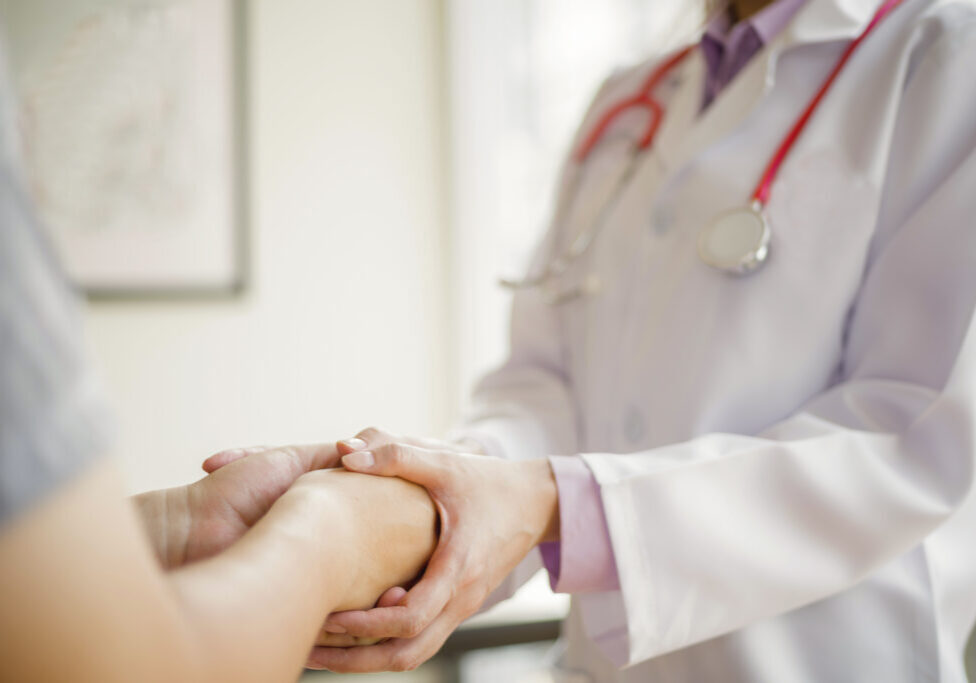
Some good news for Louisianans who get their health insurance through Medicaid: Louisiana is increasing Medicaid reimbursement rates for health care providers who participate in the program, state health department officials announced on Tuesday. The move is aimed at increasing health care access for low-income people by encouraging more health professionals to accept Medicaid patients. The Louisiana Illuminator’s Julie O’Donoghue reports:
For years, doctors have complained the rates to treat Louisiana’s Medicaid enrollees are so meager that they don’t cover the costs of providing care in some cases. The low reimbursement contributed to a shortage of specialists, such as obstetricians who deliver babies, willing to treat Medicaid patients or practice in rural parts of the state, where Medicaid use rates are higher.
The Times-Picayune | Baton Rouge Advocate’s Alyse Pfeil explains what spurred the increased rates:
The increase in provider payments comes after state Sen. Gerald Boudreaux, D-Lafayette, sponsored a bill in 2024 that directed the health department to put together a plan to increase rates. This spring, the Louisiana Legislature appropriated $258 million for the current fiscal year to cover the cost of the rate increase, including $200 million of federal funding, $22.5 million of state general fund dollars, and $26 million from savings generated by Gov. Jeff Landry’s Louisiana DOGE program, said LDH Undersecretary Drew Maranto.
Underestimating ‘Cancer Alley’
The risk of getting cancer for people living in Louisiana’s petrochemical corridor is 11 times higher than estimates from the federal Environmental Protection Agency. That’s according to a new study from scientists from John Hopkins University. The Times-Picayune | Baton Rouge Advocate’s Josie Abugov reports:
In a peer-reviewed study that aimed to measure the prevalence of 17 pollutants and compare that to measurements used in EPA models, researchers deployed a mobile air monitoring lab across Ascension, Iberville, St. James and St. John the Baptist parishes. They then used the concentrations of those chemicals in the air to estimate cancer risks in 15 different census tracts. In all but one of those tracts, cancer risks from air pollutants outweighed the estimates from the EPA’s models. All of the census tracts had “unacceptable” levels of cancer risk, the researchers found.
The discrepancies were due to the ways cancer-causing chemicals were measured:
[Johns Hopkins researchers] used real-time data on air pollutants over a month-long period in February 2023. The EPA model is based in part on emissions data from state agencies and industrial facilities. Much of this data is self-reported from industry, said Peter Decarlo, a professor of environmental health and engineering at Johns Hopkins who led the research. “I think what our results really highlight is that we can’t rely on self-reported emissions data from facilities to estimate the health risks from air pollutants,” he said.
How much has the shutdown cost Louisiana?
The federal government shutdown entered its second week on Wednesday. While there are faint signs that President Donald Trump and Congress are open to striking a deal on federal health care subsidies, which have emerged as the main obstacle in funding talks, no public negotiations are underway. The Shreveport Times’ Greg Hilburn reports on how much the shutdown has cost Louisiana so far:
Louisiana’s economy shrank by $168 million during the first week of the federal government shutdown, according to the White House, while many new mortgages in the state are on hold with the suspension of the National Flood Insurance Program. President Trump’s White House also detailed other impacts specific to Louisiana, among them 32,000 federal workers on furlough. … Supplemental Nutrition Assistance Program benefits for more than 800,000 Louisianans could also be reduced if the shutdown extends beyond 30 days.
Access to paid sick leave remains unequal
Paid sick leave helps ensure that people who get sick or have to care for family members don’t have to choose between their health and their job. But congressional inaction on a national paid leave law has left it up to states to provide this crucial resource. Elise Gould of the Economic Policy Institute explains:
The share of workers with access to paid sick days ranges from only 63% in the East South Central states (Alabama, Mississippi, Kentucky, and Tennessee) and 71% in the West South Central (Arkansas, Louisiana, Oklahoma, and Texas) up to 98% in the Pacific states (California, Oregon, Washington, Hawaii, and Alaska). The fact that the nearly 30 million workers in the Pacific states have essentially universal access to at least some form of paid sick days highlights that this key labor standard is purely a policy choice—and one that state and local governments can enforce on their own.
Paid leave is uneven across wage levels, with higher earners having greater access:
The unequal access to paid sick days is particularly troubling since low-wage workers are least able to absorb lost wages when they or their family members are sick. Workers may have trouble paying for housing, food, health care, and other necessities (see Table 1 of this report). This unequal access is why state laws are so important: Most of the gains from state and local paid sick provision benefited the lowest-wage workers. Access for the bottom 10% of wage earners increased from 19% in 2012 to 41% in 2025.
Number of the Day
$3.95 – Cost of driving 100 miles in an electric car in Louisiana. Driving 100 miles in a typical gas car in the state costs about $11.04 on average. (Source: New York Times)