
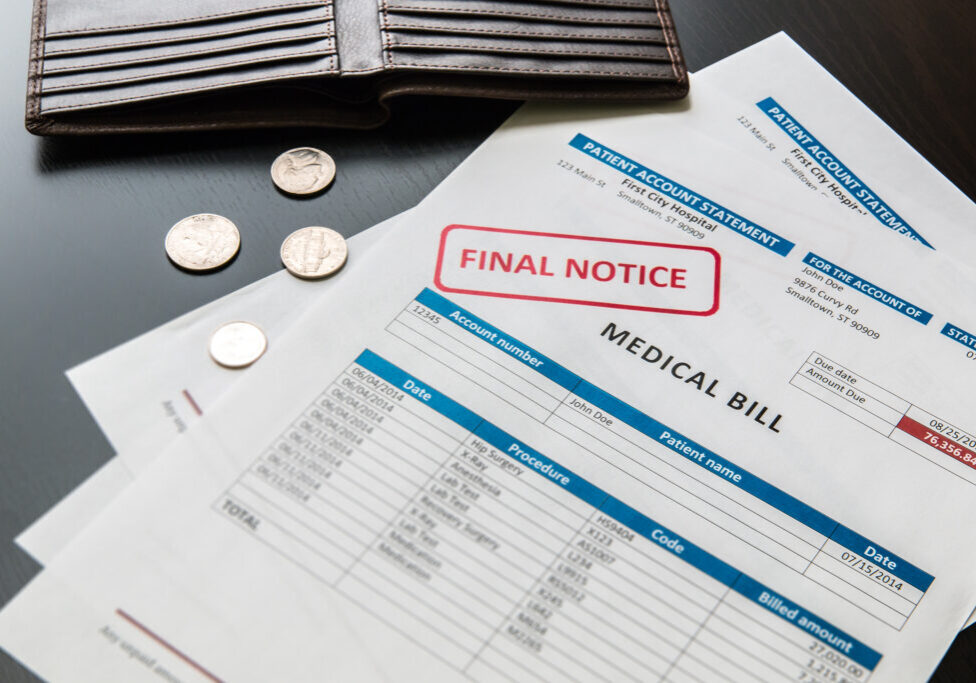
More than 17,000 Baton Rouge-area residents will have nearly $22 million in medical debt erased, thanks to a program partnership between the Huey and Angelina Wilson Foundation, Capital Area United Way and nonprofit Undue Medical Debt. WBRZ’s Alexis Marigny explains the far-reaching consequences of crushing medical debt:
“It’s horrible for the population,” Jan Moller with Invest in Louisiana said. “It’s horrible for the economy. When you’re sick you can’t go to work or take care of your kids.” … “When people lack the means or the insurance coverage they need, they’re left to navigate illness or conditions alone. Access to affordable, high-quality healthcare isn’t just a policy goal — it’s a lifeline our friends and neighbors urgently need.” [said Vice President of People-Centered Initiatives at Huey and Angelina Wilson Foundation Tristi Charpentier]
Worker protections in freefall
Federal regulatory agencies in the second Trump administration are taking drastically fewer actions against companies that violate wage and workplace safety regulations. That’s the conclusion of a recent report from Good Jobs First. Siobhan Standaert, the report’s author, lay out some key findings:
When comparing year-by-year enforcement activity:
- Combined wage and hour and safety penalties have dropped 66% in inflation-adjusted dollars.
- Wage and hour penalties have dropped 83%.
- Wage and hour enforcement cases have declined by 97%.
- Workplace health and safety penalties have dropped 47%.
- Health and safety enforcement cases have declined by 35%.
Proposed rule changes could further erode crucial worker protections:
[Occupational Safety and Health Administration], for example, has proposed to narrow respirator guidelines for asbestos; remove construction lighting-safety requirements; and change its General Duty Clause (the catch-all provision for safety standards) requirements to exclude activities that are “inseparable” from the work. These changes are expected to further diminish effective worker protection efforts.
States should reduce or eliminate criminal fines and fees
Many states, including Louisiana, largely fund criminal legal systems by fines and fees. A new report from the Center on Budget and Policy Priorities explains why this practice places a heavy burden on people with the fewest resources:
In a 2010 study, one interview participant reported that he would pay off his fines and fees by “rob[bing] Peter to pay Paul” – cutting back or not paying for medicine, food, rent, and other basic needs.[4] … And for those unable to pay, outstanding debt can result in garnished wages, driver’s license suspensions, and even arrest and jail time.[6]
There are better ways for states to raise revenue than relying on fines and fees:
States can pursue revenue solutions including right-sizing taxes on wealthy corporations and households, scrutinizing costly economic development incentives and other wasteful tax breaks, modernizing state sales taxes to ensure that goods and services are treated equally, and easing restrictions on local governments’ ability to raise revenue via property taxes.
BEAD changes broke the law
The Trump administration’s rewrite of the rules for the Broadband Equity, Access, and Deployment (BEAD) Program, a $42 billion Biden-era initiative aimed at expanding high-speed broadband access to rural areas, was illegal because the changes were not submitted to Congress. That’s according to the Government Accountability Office. The tweaks included transitioning away from underground fiber-optic cables to satellites from Starlink, which is owned by Elon Musk. Route Fifty’s Chris Teale reports:
After states have undertaken months of work to amend their plans to comply with the administration’s new rules, the GAO findings create new concerns about whether BEAD money will ever flow down to the states, even as several have talked up the possibilities of what they can do with that cash. Louisiana Gov. Jeff Landry, whose state was among the first to be approved by NTIA, called BEAD a “generational investment,” while Veneeth Iyengar, executive director of state broadband office ConnectLA, said in November it meant the state could “shift from planning to putting shovels in the ground in the next several weeks.”
The changes to BEAD could result in fewer homes getting high-speed internet, according to an analysis from Broadband Expanded. The number of BEAD-eligible locations in Louisiana is expected to decrease by 36% as a result of the changes by the Trump administration.
Number of the Day
5.7% – Percentage of U.S. workers with multiple jobs in November, a 25-year high. (Source: U.S. Bureau of Labor Statistics via the Washington Post)